This Barrel Will Outlive Us
Reviving Japan’s Soul Vessels of Fermentation
I have struggled to write and put word to this article since February when I visited Shodoshima and literally embark on a trip through tradition, innovation, and discovery that left a great impression on me. I hope to refine this brief mind dump in the future and crystalize it further, but for now, allow me to get some feelings on wooden barrels out there.
This past winter, I had the opportunity to participate in the Kioke Summit, part of the Kioke Craftsmen Revival Project. What is a Kioke? A wooden barrel, a simple tool yes, but one with infinite possibilities, and it is dying out. Kioke are a fascinating tool, expanding and contracting to the desired use. From water vessels, small ferments at home, bathtub size, sake shipping/aging barrels all the way to the gigantic 30 koku (5400 liters) ones used for miso, soy or sake brewing.
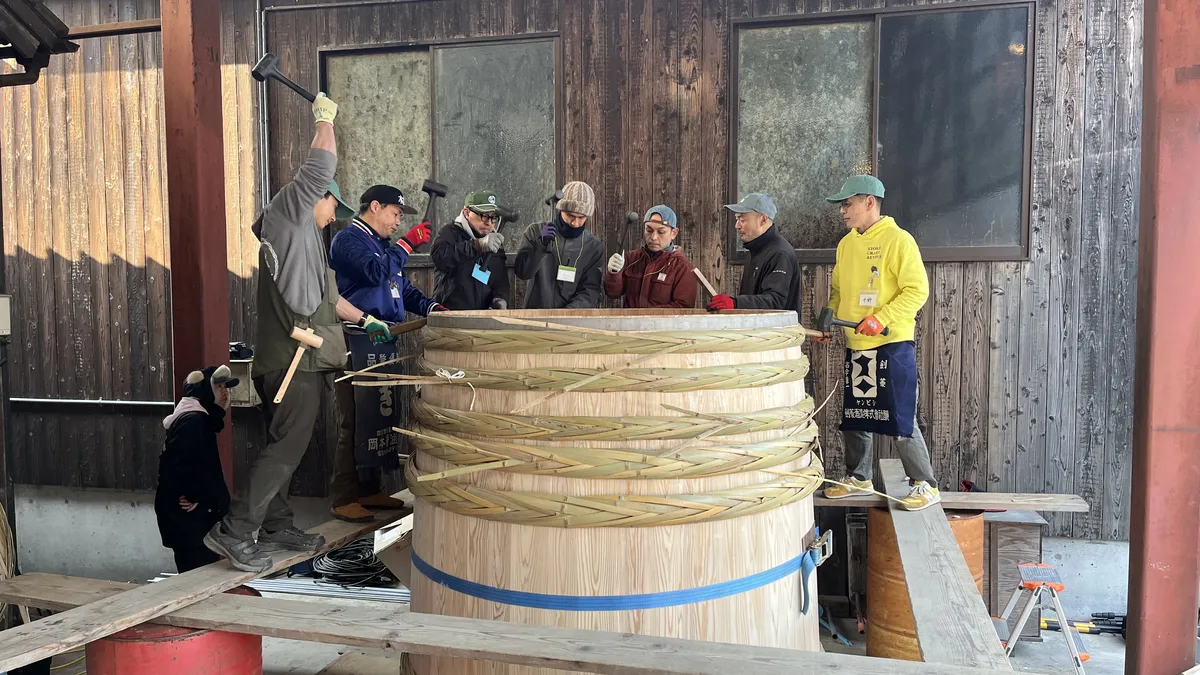
Hammering down the Taga loops, weaved using long strips of bamboo, to secure the walls of the Kioke
Its usage is in a steep decline with the adoption of other materials like steel, enameled tanks and of course, plastic in the brewing and fermentation world at scale. Only a handful of makers has preserved the tradition and survived the pass of time, mainly through the repairs this kind of barrels requires. Many of which moved to other carpentry jobs or closed shop over time. Kioke can last around 100–150 years, essentially outliving their makers, and most likely their inheritors as well. Bridging their products, history and their biological microcosm to the upcoming generations.
I discovered Kioke through the consumption of staple traditional Japanese ingredients like miso and soy sauce. Tsukemono, pickled foods, was another big one that got me hooked into looking for local pickling shops around Kyoto, who often exhibit their goods inside this beautifully crafted wooden barrels, although most commonly nowadays wrapped into plastic bags. Sad, but true and necessary for sanitary reasons, as those food items are exposed all day long to visitors.
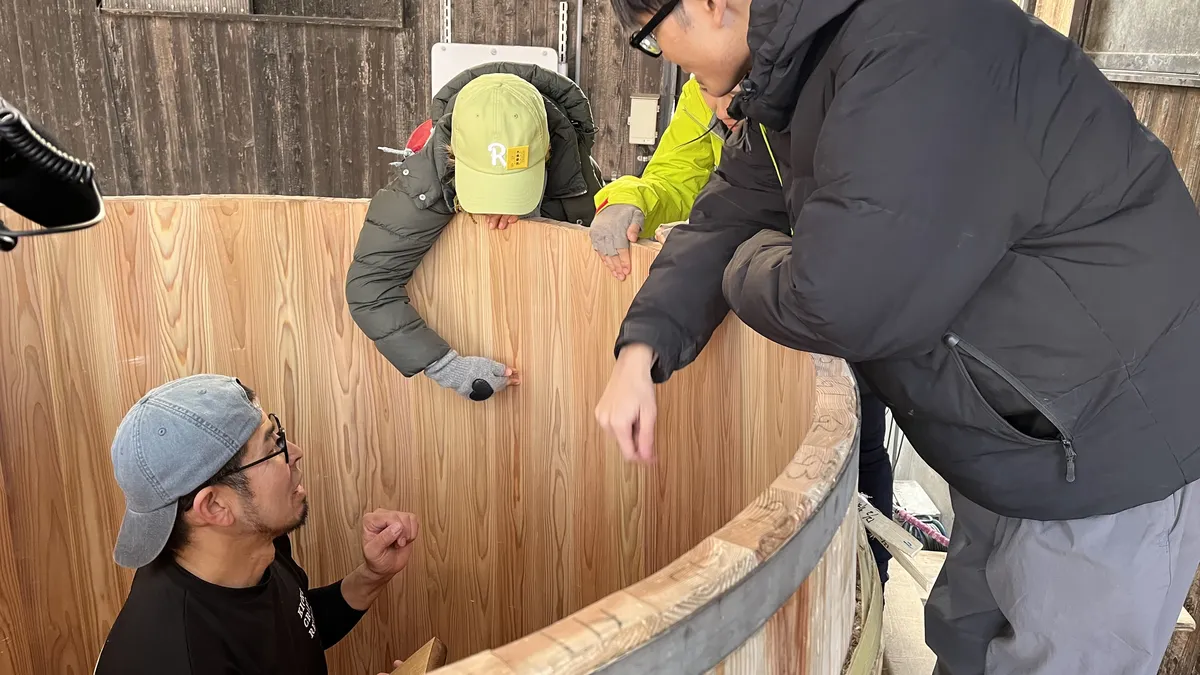
Inspecting and planing the joints on the inside wall of a Kioke
What really sparked a more profound interest in Kioke was Awabancha, a traditional fermented tea from Tokushima Prefecture. Together with other fermented teas in Shikoku like Goishicha, Kioke are used to hold the leaves during fermentation, slowly imbuing the process with their microbiological signature. Wooden tools are a must for these teas, although nowadays plastic fermentation buckets are a common tool as well. Shortly after participating in the Awabancha festival in December 2023 I also discovered my passion for sake through a brewery that still uses the gigantic 5000 liter Kioke for their products. All these occurrences made me wonder… where and how are those buckets made?
The reality is that I was welcomed by a barren landscape, with not many producers of Kioke out there. Search for a bit more, and you will find the local craftsman still active, although rare and difficult to contact. The ones still active either will take time to make one as they have multiple requests or on the opposite side they started doing other jobs as the dynamics of the trade have shifter over the years. A sliver of hope shone when I knew about the Kioke Craftsmen Revival Project. A movement that started in 2010 not to only revive the use of wooden barrels, but a movement to educate and teach how to make them again.
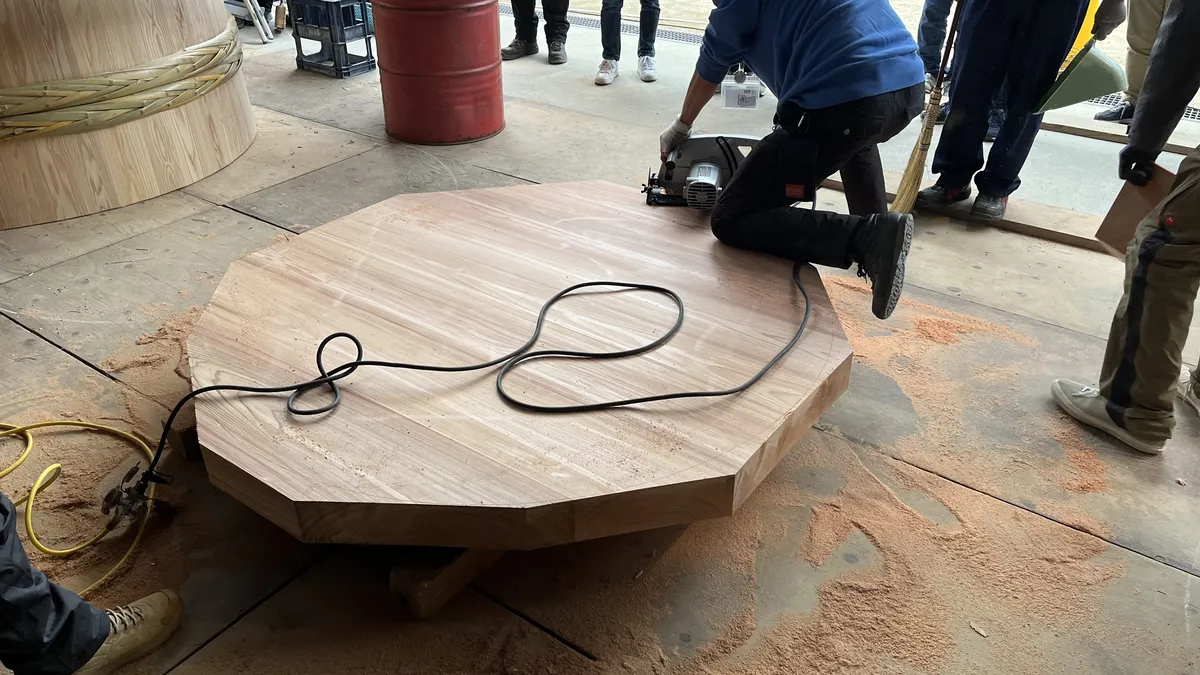
Cutting the thick baseplate that will be inserted and fitted simply by pressure into the body of the Kioke
Some of the biggest pillars of Japanese Traditional cooking were made using Kioke as tools. Miso, soy sauce, mirin, miso, sake, and a myriad of pickle foods across the country. In a way, I have learned that Kioke is not just a tool, but an inherent soul fragment of the ingredients it contains.
At the Kioke summit, I learned that only about 1% of soy sauce is made using Kioke. I was able to meet with some miso brewers as well, one of them located in Mie Prefecture is now home to one of the barrels we help create during the 3-day summit. This barrel will be used for miso currently, but in its next 100–150 years of life it could cradle other ingredients. A beautiful reminder that even a simple tool as is a barrel or wooden bucket can easily outlast a human lifespan.
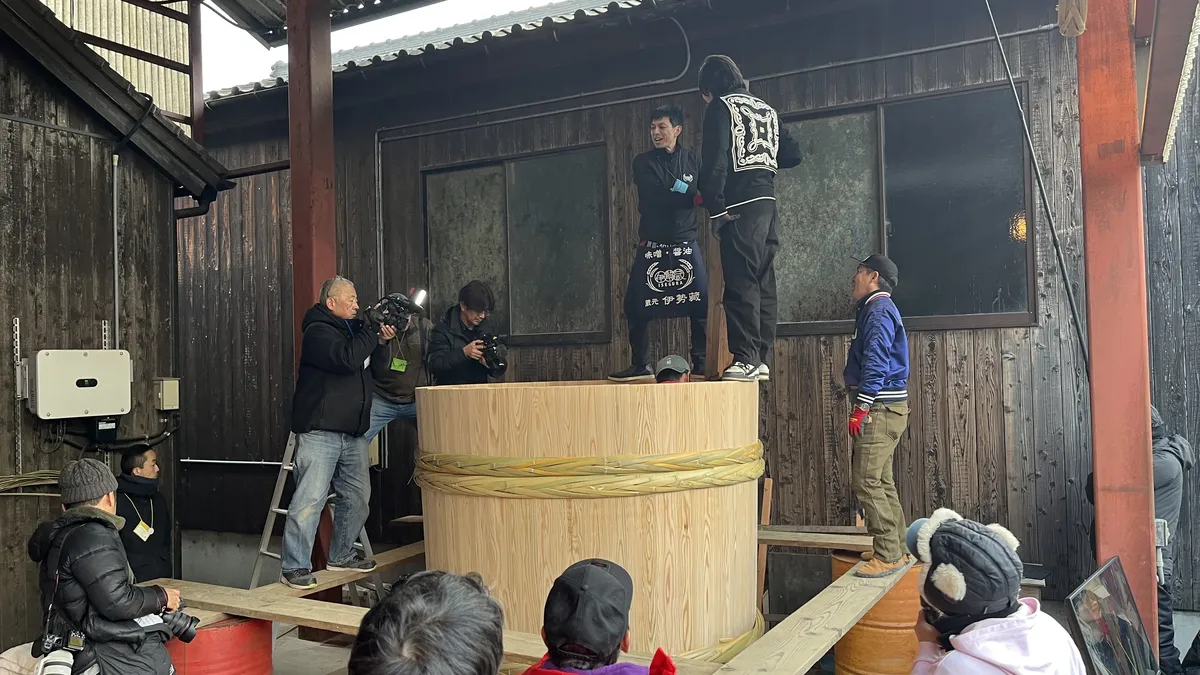
The baseplate is slammed with a wooden pillar bit by bit, leveling it as it get closer to the bottom of the barrel.
For now, though, the revival project seems to have gained tractions in the years it has been in running. With more breweries of different spectrums of the Japanese cooking industry not only bringing in and commissioning new barrels but, learning and making their own as well. Well-known sake breweries have had their carpentry workshops where they can produce they own tools, and while still a rare sight, you can find them.
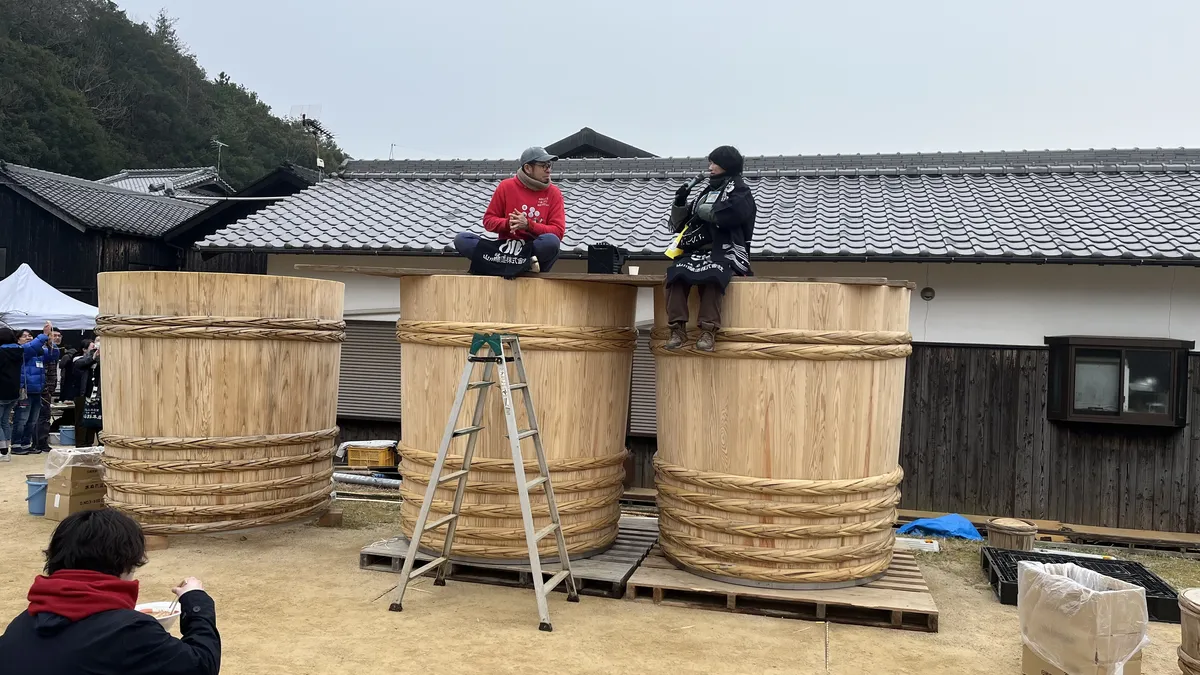
Kanako-san from Yamakawa Jozo Brewery (right) interviewing one of the carpenters (left) teaching how to make Kioke while sitting atop of two new barrels made just before the summit.
More importantly, the success of the revival project lies on one simple, but essential part, the base of breweries willing to use them and help to produce them is increasing. Even a couple of similar revival and production projects have spun in a few occasions across Japan by now directly or indirectly related to the Kioke Craftsmen Revival Project. Growing new roots and providing support to those willing to embark on their own Kioke activities. All while passing down that knowledge to the new generation of brewers, across the industry and Japan. From how to make them, how to care for them, their cultural significance and perhaps most touching to me, reconnect the younger generations in both the consumer and producers to a different way of doing things.
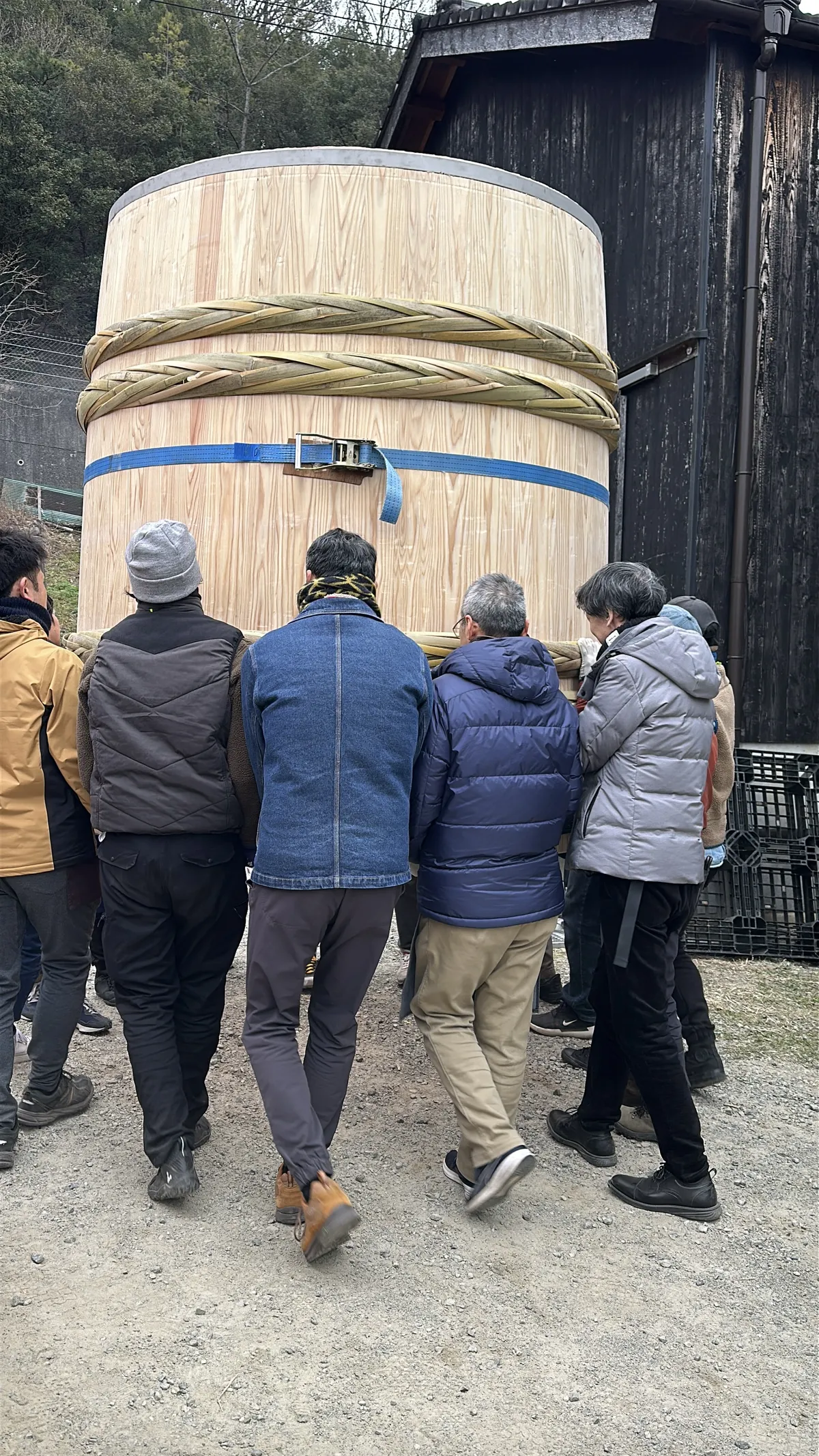
Moving the newly born Kioke into the brewery. I am the one with the grey hat, It was very heavy! Photo Credit: picture shared with me by an attendant of the summit, I forgot who :(